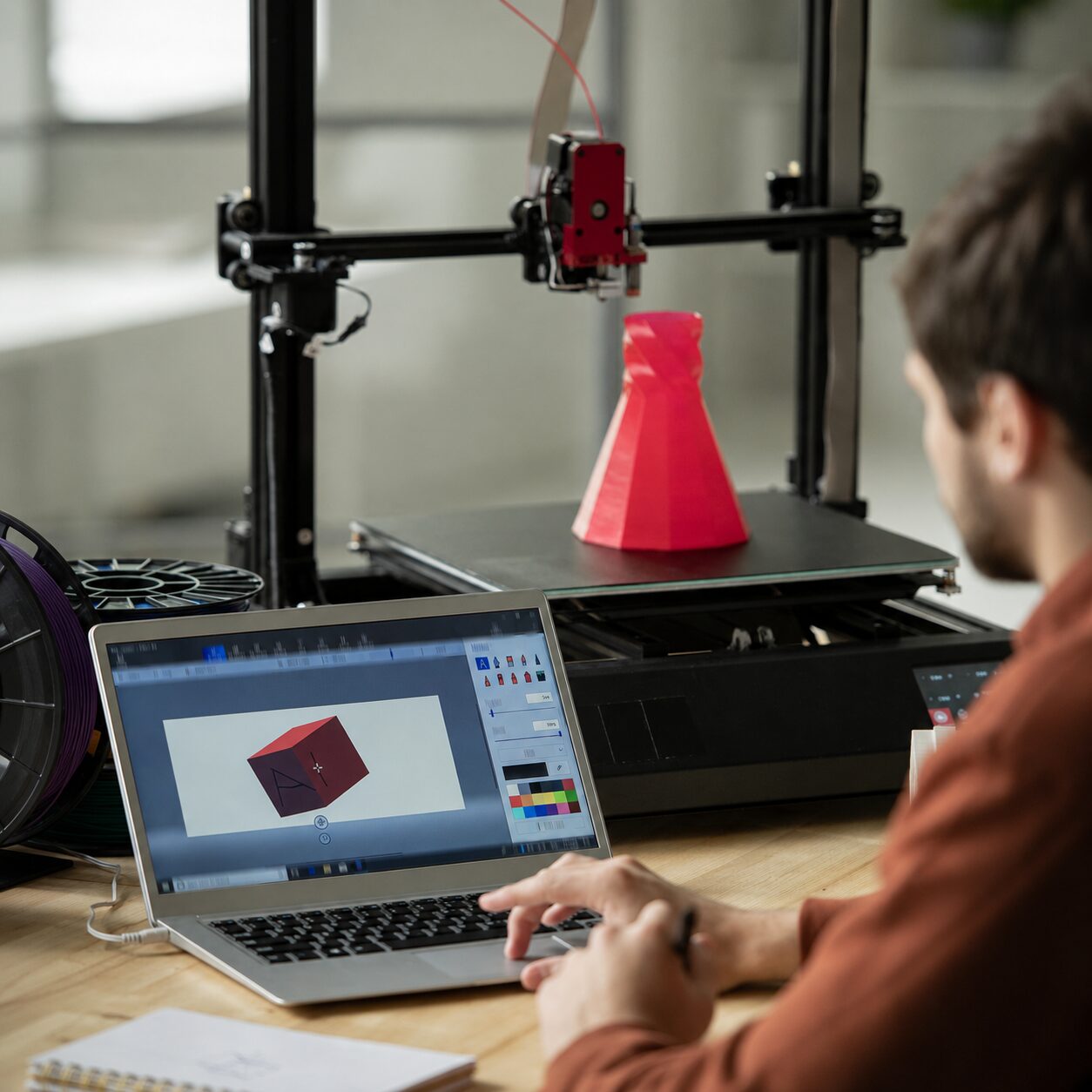

3D printed interlocking parts are a revolutionary development in the field of digital manufacturing. Product design and prototyping are now more efficient, flexible, and precise than ever because of these intricate, adaptable connections. Knowing how 3D Printed Interlocking Parts operate can lead to new design and production opportunities, regardless of your level of experience as an engineer or as a hobbyist.
Interlocking joints 3D printing is transforming the way parts fit together and work in everything from furniture and toys to medical equipment and architectural models. However, what are these components precisely, and why are they changing industries all over the world?
What Are 3D Printed Interlocking Parts?
Fundamentally, 3D Printed Interlocking Parts are parts made to fit, slide, or snap together without the use of extra adhesives or fasteners. Geometric features like tabs, slots, dovetails, or snap-fits enable these pieces to lock into place since they are printed with exact tolerances.
Interlocking 3D printed parts provide smooth assembly and frequently do not require post-processing, in contrast to traditional mechanical fastening. This method improves product accuracy, durability, and cost-effectiveness in addition to speeding up manufacturing.
Why Designers Prefer 3D Printing Interlocking Parts
In a number of ways, the idea of 3D printing interlocking parts has transformed the design and production process:
1. Enhanced Efficiency
Designers can do away with the requirement for external components or many build phases by printing completely functional assemblies all at once. Faster turnaround times, less labor, and less material waste result from this.
2. Customization at Its Best
The simplicity of customisation is one of the most notable benefits of 3D printed interlocking parts. Interlocking prints can be customized to meet particular needs or aesthetic preferences, from ergonomic handles to precise mechanical movements.
3. No Tools Required
Interlocking parts snap together seamlessly without the need for glue, bolts, or screws because of their precise design and tolerances. This makes repairs or upgrades much simpler by simplifying assembly and disassembly.
Applications of Interlocking 3D Prints in Modern Industries
Prototypes and artistic endeavors are no longer the only applications for interlocking 3D prints. This approach is being used by a number of industries for useful, real-world applications:
- Medical Devices: Snap-fit, modular components enhance patient outcomes and ergonomics in anything from surgical instruments to prosthetics.
- Architecture: Detailed constructions with detachable portions are displayed in scale models with 3D printed interlocking elements.
- Consumer Products: 3D printed interlocking parts allow for streamlined, tool-free assembly of toys, furniture, and devices.
- Automotive and Aerospace: Interlocking geometries are used by engineers in the automotive and aerospace industries to quickly test and iterate parts that need to be durable but interchangeable.
Mastering the Design of Interlocking Parts
Designing for 3D print locking joints requires a thorough understanding of tolerances, material behavior, and structural strength. Here are some pointers:
● Know Your Printer and Material
The rates at which various materials expand or contract vary. The way that PLA, ABS, and PETG react to heat has an impact on how well your interlocking joints fit.
● Test Your Tolerances
The secret to effective interlocking 3D printed parts resides in flawless tolerances. If it’s too tight, parts won’t fit; if it’s too loose, they’ll fall apart. To achieve the ideal fit, start with test prints.
● Use Design Software Effectively
Tools for creating accurate interlocking mechanisms are available in programs like Tinkercad and Fusion 360. The correct CAD tools can improve your project, whether it’s a live hinge, snap-fit, or dovetail.
Conclusion
The revolutionary potential of 3D printed interlocking parts in contemporary design and manufacturing is undeniable. These components are essential to the future of fabrication because they can improve customisation, lower prices, and expedite production.
Designers can push the envelope and create innovative goods by utilizing techniques like
- 3D printing locking joints
- Interlocking 3D printed parts
- 3D printing interlocking joints
The next important step in your process might be using 3D print interlocking parts. It could be irrespective of whether you’re making basic consumer goods or building intricate prototypes.
The moment has come to take advantage of the accuracy, innovation, and efficiency that 3D Models printed interlocking parts provide. Explore the world of interlocking 3D printing and begin creating better, faster, and more intelligent structures.
FAQs
How to connect two 3D printed parts together?
Cyanoacrylate, another name for superglue, may be your best option! There’s a reason it’s a popular choice: Easy to use: It’s ideal for novices because you just need a drop or two.
What is the 5mm rule in 3D printing?
In order to prevent sagging or deformation during printing, the 5 mm rule in 3D printing is a general guideline that states that any unsupported horizontal overhangs should not be greater than 5 mm. In order to preserve print quality, support structures are typically needed for overhangs greater than 5 mm.
How could 3D printing revolutionize the construction industry?
Large-scale printers that layer materials according to digital plans are making it possible to build homes due to 3D printing technology, which is completely changing the construction sector. This technique, which frequently uses concrete or composite materials, enables the accurate and quick building of complicated structures.
What is the most profitable 3D printed item?
Since toys are entertaining, customizable, and available in a wide variety of designs, they are among the most lucrative items to 3D print and market. For instance, you may create puzzles, board games, fidget toys, and animated dragons, sharks, and cats. Creative toys are not just for children; adults find them appealing as well.
Is it legal to sell 3D prints?
First of all, just to be clear, we are not providing legal advice here, and local laws vary. Generally speaking, though, no. Generally speaking, unless you have the creator’s specific consent, it is illegal to sell a 3D print made from a digital file that you either bought online or got for free.
How to bond 3D printed parts?
A Comprehensive Guide to 3D Print Gluing
First, get the surface ready. Ensure that the surface you intend to adhere is clean and smooth.
Step 2: Assemble the components dry. Dry-assemble the components to ensure alignment before gluing.
Step 3: Put glue on it.
Step 4: Make sure the bond is secure.
Step 5: Remove any extra glue.
Sand the seams in step six.
What is 3D Gloop?
3D Gloop is a product with multiple uses.
1). It offers a great weld across materials, including PETG and PLA, which might be challenging to adhere.
2). It can be applied to the treatment of bed adhesion.
3). You can use it to make your parts smooth.
Will PVC glue work on PETG?
Chemical Compatibility: Although PVC glue is effective, it is not made especially for PETG and might not offer as strong of a bond as adhesives made for materials used in 3D printing.
Is polycarbonate or PETG stronger?
PETG is an excellent option for machine protection. Although it lacks polycarbonate’s impact strength, it is far stronger than acrylic. Typically, the price falls between that of polycarbonate and acrylic.
Is JB Weld good for 3D prints?
More applicable to 3D printing projects involving plastics, JB Weld for Plastic is a customized variation of the traditional JB Weld epoxy designed especially to fuse plastic components.