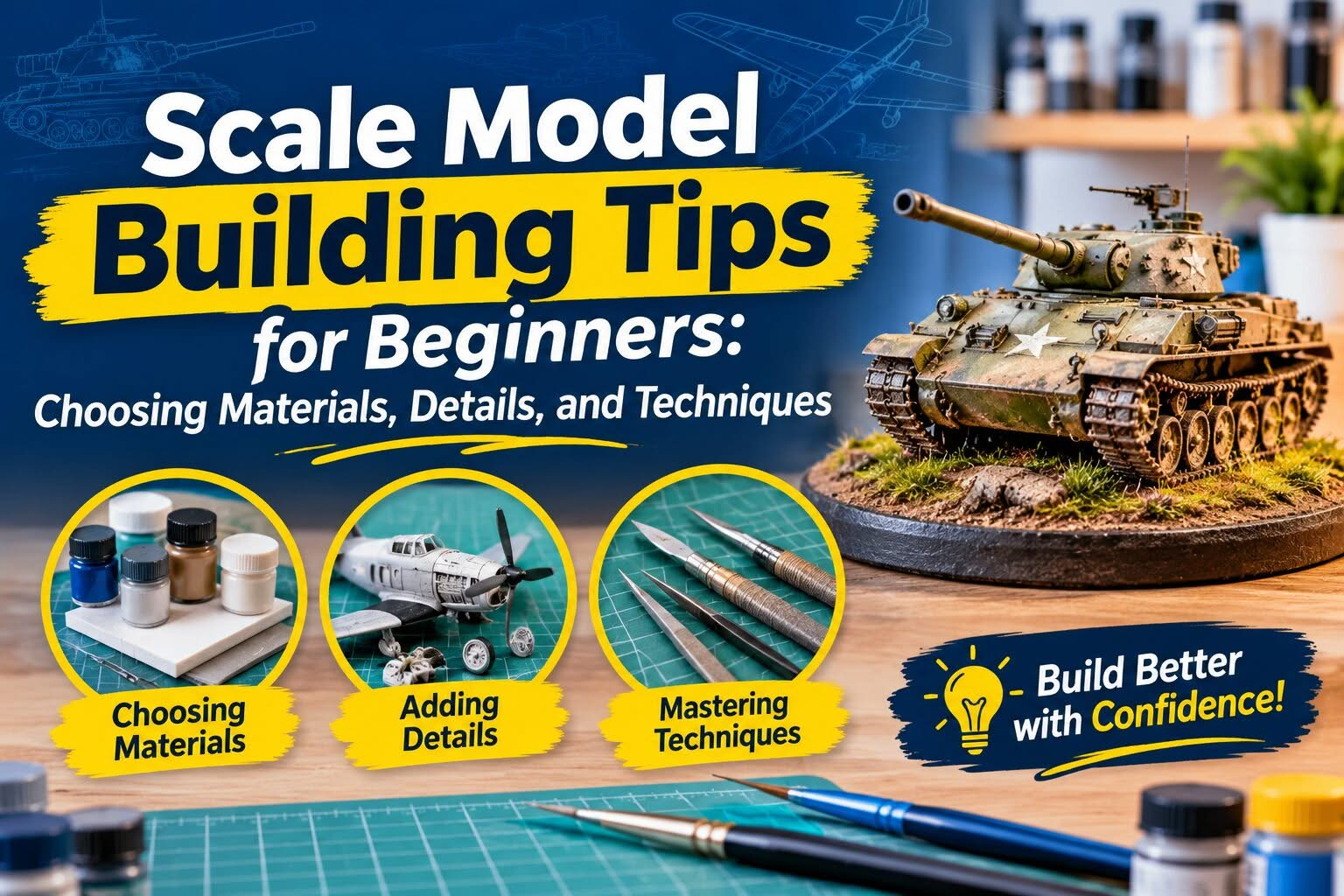

Building a scale model is a great way to turn an idea into something you can see and explore. From architectural designs to ships and engineering equipment, scale models help people understand how an object or structure may look and work in real life. However, beginners often wonder where to start, which materials to choose, and how to get the details right.
With a clear plan and the right approach, the scale model building tips for beginners below can help you understand the model building process and make better decisions for your project.
Let’s look into the whole process.
1. Start with a Clear Plan
Before Model Building, decide what you want to create and how you plan to use it. Is it an architectural model for a presentation, a miniature of a machine, or a model for product development? Your purpose will help you decide the model’s size, level of detail, and materials.
For example, an architectural model may need clearly represented walls, windows, and building layouts. An engineering model may require accurate dimensions to show how different parts fit together. Therefore, deciding upon the purpose is crucial.
2. Choose the Right Materials
Material selection affects the model’s appearance, strength, and level of detail. Plastic and metal are two options used in professional 3D printing, and each may suit different project requirements. Consider these points before making your choice:
- Plastic: Can be suitable for lightweight models, detailed components, and visual displays.
- Metal: May be appropriate when a project requires particular material properties or specific engineering applications.
- Project requirements: Consider the model’s intended use, size, complexity, and required level of detail.
The best choice for the model-building process depends on your design. If you are unsure, discuss your requirements with a professional model-making team before production begins.
3. Pay Attention to Scale and Details
A scale model represents a real object or structure at a different size. Maintaining the correct proportions is important because even small measurement errors can affect the final result.
For instance, if you are creating a miniature building, the doors, windows, and walls should look proportional to one another. Adding too many tiny features can also make a small model look crowded.
Start with the main structure, check the dimensions, and then focus on smaller details. This approach helps you maintain a clear and realistic design.
4. Understand the Model Building Process
A good model building guide starts with a design and follows a clear process from concept to finished model. A typical workflow includes:
- Planning: Define the purpose, dimensions, and required details.
- Designing: Prepare the drawings or 3D model.
- Material selection: Choose a suitable plastic or metal based on project needs.
- Production: Create the physical model using an appropriate manufacturing method, such as 3D printing.
- Finishing and assembly: Complete the required post-production work and assemble the model where needed.
Professional services can be useful when a design has complex shapes, precise dimensions, or several parts that must fit together.
5. Consider Professional Scale Model Making
Some projects require more than basic assembly. Architectural displays, maritime models, and engineering prototypes may need detailed design work, accurate production, and careful assembly.
Scalemodel3dprinting provides 3D printing, custom model-making, and assembly services of Scale Model Making to help turn concepts into physical models. Working with an experienced team can be helpful when a project has specific technical requirements or needs a professional presentation.
Conclusion
Successful scale model making begins with a clear plan, suitable materials, accurate measurements, and attention to detail. By understanding each stage of the model building tips for beginners can make informed choices and avoid common design mistakes.
Need help turning your concept into a physical model? Visit our website to explore our 3D printing and scale model-making services and discuss your project requirements.